DNS vs VPN: What’s the Real Difference—and Which One Should You Use?
If you’re comparing DNS vs VPN, you’re likely trying to answer one simple question:
Do I need speed, privacy, or control—and what’s the right tool for that job?
While DNS services and VPNs are often mentioned together, they solve very different problems. Choosing the wrong one can lead to privacy leaks, gaming lag, blocked content, or false expectations.
This guide breaks it down clearly—without jargon, bias, or sales noise.
What Is DNS (Domain Name System)?
DNS is the internet’s address book.
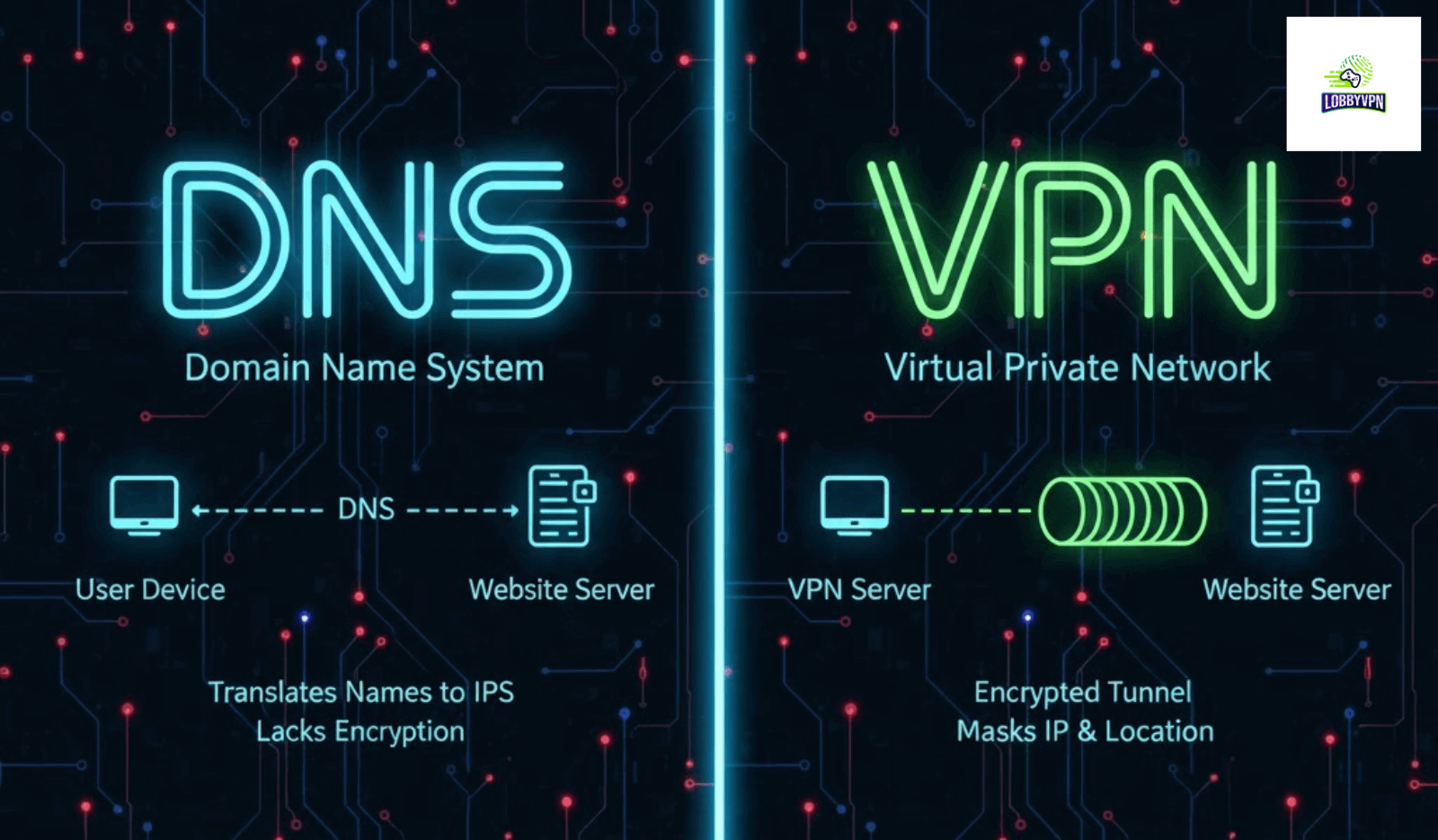
When you type a website name into your browser, DNS translates it into an IP address so your device knows where to connect. Without DNS, the modern web simply doesn’t function.
Why People Change Their DNS
- Faster site resolution than ISP DNS
- Basic privacy improvements with encrypted DNS
- Content filtering and parental controls
- Lightweight geo-routing (Smart DNS)
However, DNS does not encrypt your internet traffic. It only handles name resolution.
What Is a Smart DNS?
A Smart DNS enhances traditional DNS by selectively routing requests through servers in different regions.
What Smart DNS Can Do Well
- Unblock geo-restricted streaming services
- Improve streaming compatibility on devices that don’t support VPNs
- Maintain native internet speeds (no encryption overhead)
Where Smart DNS Falls Short
- No IP masking
- No traffic encryption
- Cannot protect non-DNS traffic (apps, torrents, games)
Smart DNS is about convenience, not security.
What Is a VPN—and Why It’s Fundamentally Different
A Virtual Private Network (VPN) encrypts all internet traffic and routes it through a secure tunnel.
When using a VPN like Cure VPN, your ISP sees only one thing:
an encrypted connection—nothing else.
Core Benefits of a VPN
- Full traffic encryption
- IP address masking
- Protection on public Wi-Fi
- Bypass censorship and ISP throttling
- Consistent geo-location control
This makes VPNs the preferred choice for privacy, security, and advanced use cases.
DNS vs VPN: The Core Differences
| Feature | DNS | Smart DNS | VPN |
|---|---|---|---|
| Encrypts traffic | ❌ | ❌ | ✅ |
| Hides IP address | ❌ | ❌ | ✅ |
| Works on all apps | ❌ | ❌ | ✅ |
| Geo-unblocking | ⚠️ Limited | ✅ | ✅ |
| Gaming & torrent safety | ❌ | ❌ | ✅ |
| Speed impact | Minimal | Minimal | Slight (optimized VPNs minimize this) |
DNS vs VPN for Gaming: What Actually Works?
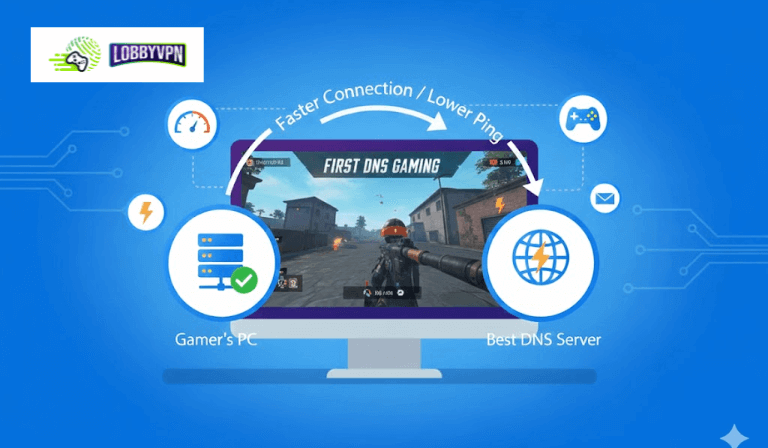
Gamers often search for DNS tools hoping to fix lag—but DNS cannot reduce network latency at the routing level.
If You’re Trying to:
- How to Fix Lag in Call of Duty → DNS won’t help
- Access Best Warzone Server Locations → VPN required
- Follow a Free Bot Lobby VPN Guide → VPN required
A properly optimized VPN can route traffic through lower-latency paths, especially during peak congestion.
That’s why competitive players look for the Best Gaming VPN for COD Players, not a DNS workaround.
DNS vs VPN for Streaming & Geo-Unblocking
- Smart DNS is fine for non-sensitive streaming
- VPNs are better for:
- Travel
- ISP throttling
- Region-locked platforms
- Privacy-sensitive environments
VPNs also adapt faster when streaming platforms change detection rules.
DNS vs VPN for Remote Work & Desktop Access
If you use:
- RDP
- SSH
- Cloud desktops
You need encryption.
This is why professionals look for the Best VPN for Remote Desktop, not a DNS solution. DNS cannot secure active connections—VPNs can.
VPNs Beyond Browsing: Real-World Use Cases
A VPN isn’t just about anonymity.
It’s also essential for:
- Secure torrenting
- Public Wi-Fi safety
- Competitive online gaming
- Accessing global servers
- MMOs like Warframe (Best VPN for Warframe users)
When DNS Is Enough—and When It’s Not
DNS Is Enough If You:
- Want light content filtering
- Need basic geo-unblocking
- Care about speed over privacy
You Need a VPN If You:
- Want real privacy
- Game competitively
- Use public Wi-Fi
- Work remotely
- Torrent or bypass ISP throttling
Final Verdict: DNS vs VPN—Choose Based on Risk, Not Convenience
DNS improves how you reach the internet.
A VPN protects what happens once you’re there.
If privacy, performance, or control matters—even occasionally—a VPN like Cure VPN is the safer, more future-proof choice.
DNS tools are helpers.
VPNs are shields.